
Views: 200 Author: Site Editor Publish Time: 2026-03-25 Origin: Site
Meal planning often feels like one more overwhelming chore on an already full schedule. Many people avoid it simply because it seems time-consuming, rigid, or just another thing to “get right” for themselves and their families. But meal prep doesn’t have to be stressful. With the right system, it can become a calm, intentional daily ritual that saves you time, cuts down food waste, lowers your grocery spending, and helps you eat more consistently nourishing meals. The simplest and most effective way to build this habit is with a dedicated weekly meal planner.
In this guide, we’ll show you exactly how to use a meal planner to take control of your weekly meals, explain why structured planning works so well, and how our Weekly Meal Planner with Grocery List can make healthy eating easier than ever before.
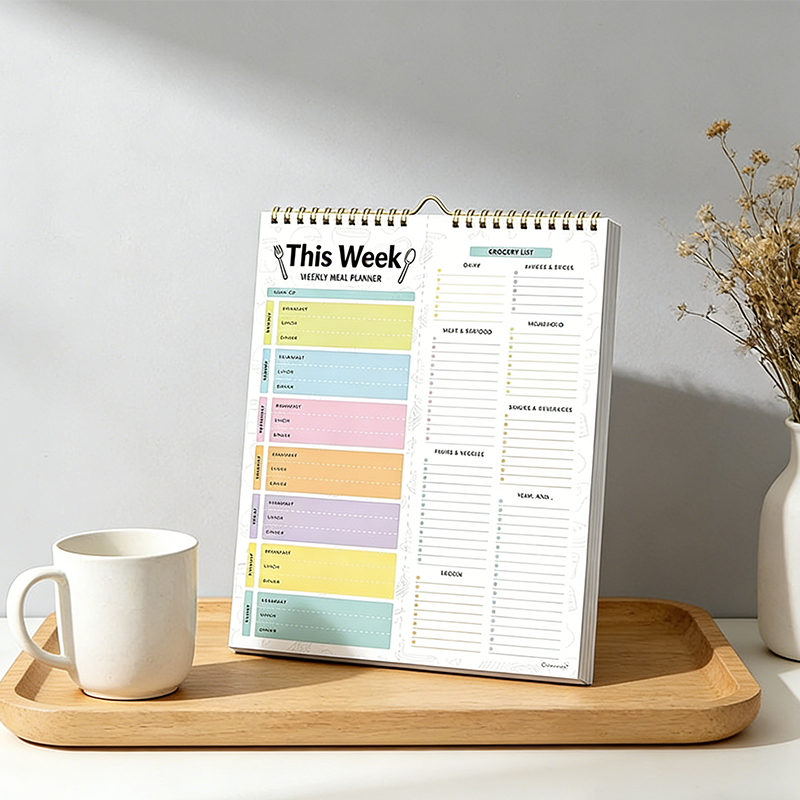
Meal planning is far more than just writing down dinner ideas. It’s a lifestyle habit that improves productivity, finances, nutrition, and mental well-being all at once.
How many evenings have you stood in front of the fridge at 6 PM, exhausted, with no idea what to cook? These last-minute decisions often lead to takeout, rushed meals, or wasted energy. A 2017 study published in the Journal of Nutrition Education and Behavior confirmed that people who plan meals spend 20 minutes less each day on cooking, shopping, and cleaning compared to those who don’t.
Spending just 15–20 minutes on Sunday mapping your week eliminates stressful “what’s for dinner?” moments entirely. With a clear plan in place, you no longer waste time deciding, searching for recipes, or running back to the store for missing ingredients.
According to the U.S. Department of Agriculture, the average family wastes nearly 30% of the food they purchase. Much of this waste comes from impulse buys, forgotten produce, and mismatched meal ideas.
Meal planning solves this by ensuring you only buy what you actually need. When paired with a structured grocery list—like the one included in our Weekly Meal Planner—you avoid unnecessary purchases and overstocking perishable foods. Over the course of a month, this simple change can save you hundreds of dollars.
When hunger and time pressure collide, most people reach for convenient, highly processed, high-calorie foods. Meal planning puts you back in control. You can balance protein, fiber, and healthy fats, include more fruits and vegetables, and design meals around your personal goals—whether you follow a plant-based diet, low-carb lifestyle, or simply want more variety in your diet.
A 2020 study in Appetite linked consistent meal planning to higher intake of whole grains, vegetables, and fruits, as well as lower fast-food consumption. Planning ahead helps you eat intentionally, not reactively.
Daily decisions drain mental energy, a phenomenon known as decision fatigue. Choosing meals over and over again throughout the week only adds to this stress. A reliable weekly meal plan removes that burden, creating a predictable, calming routine.
Knowing exactly what you’ll eat each day allows you to start mornings with clarity and end evenings with comfort. It’s one of the easiest ways to bring calm to a busy schedule.How to Use a Weekly Meal Planner: A Simple, Effective System
Our Weekly Meal Planner with Grocery List is designed to remove friction from the entire process. Follow these steps to build a sustainable meal-planning routine.
Start by checking your calendar for busy days, late meetings, or activities. Plan quick, easy meals like stir-fries, leftovers, or one-pan dishes for hectic weekdays. Save more involved recipes for relaxed days like Sunday. Your meal plan should support your lifestyle, not restrict it.
Use the clearly labeled daily sections to plan full days of eating. Keep breakfast simple and repeatable—oatmeal, smoothies, or egg cups work wonderfully. Use dinner leftovers for lunch to save even more time. For dinners, rotate 3–4 core recipes and leave one “flex night” for takeout or spontaneous meals.
As you plan each meal, add ingredients to the pre-organized grocery list in your Weekly Meal Planner. It is divided into logical sections such as dairy, meat and seafood, fruits and vegetables, and pantry items. This structure speeds up shopping, prevents forgotten items, and reduces impulse purchases.
Spend 1–2 hours on Sunday prepping ingredients: chop vegetables, cook grains, marinate proteins, or portion snacks. This small upfront effort makes cooking during the week feel almost effortless.
The best meal plans are adaptable. If your day doesn’t go as expected, simply swap meals or use quick alternatives. Consistency is far more important than perfection.
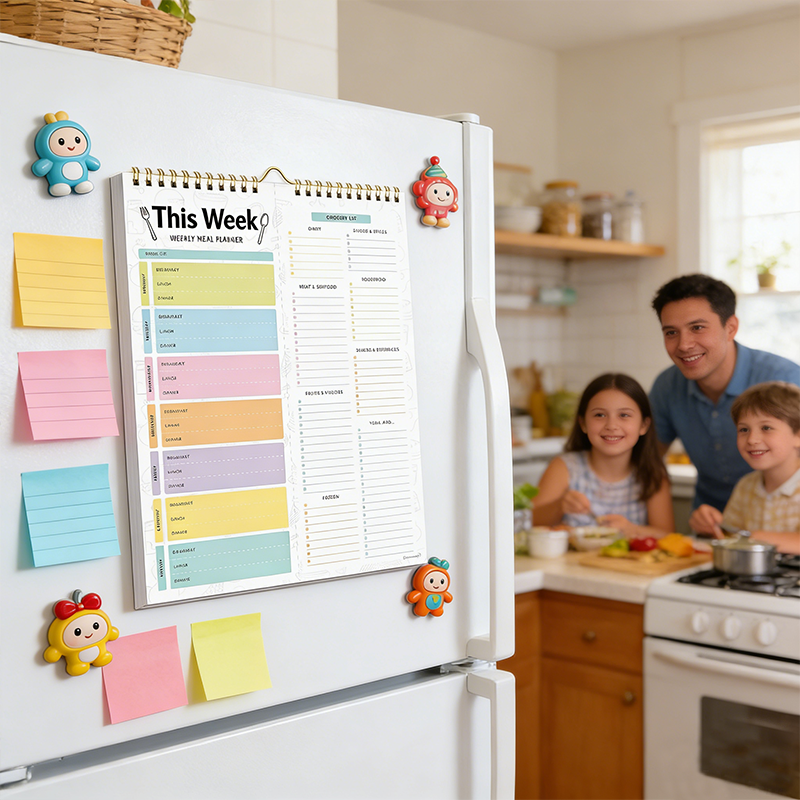
Meal planning is effective because it follows proven principles of behavioral psychology.
Reduces Decision Fatigue: By pre-deciding meals, you eliminate dozens of small weekly choices and preserve mental energy.
Strengthens Implementation Intentions: Research by psychologist Peter Gollwitzer shows that written, specific plans significantly increase the chance of following through on healthy habits.
Supports Habit Stacking: When you attach meal planning to existing routines—like Sunday coffee or laundry—it becomes much easier to maintain long-term.
Uses Environmental Cues: A well-designed grocery list helps you avoid impulse buys, making healthy choices the default option.
Our Weekly Meal Planner supports all these psychological triggers, turning good intentions into real-life results.
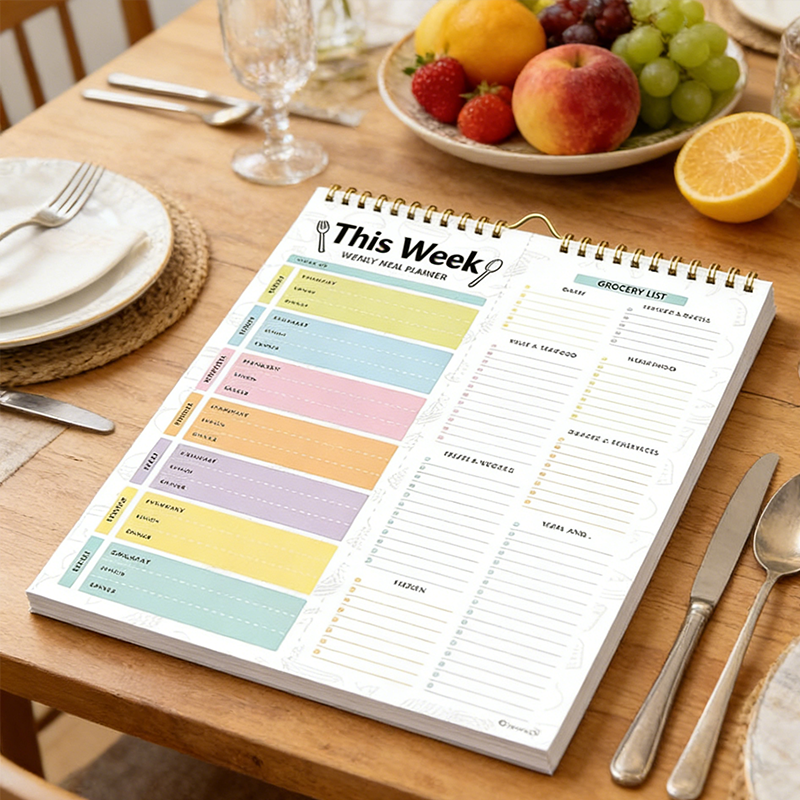
While any notebook can be used to plan meals, a purpose-built tool makes the process smoother and more sustainable. Our Weekly Meal Planner with Grocery List is designed for real, busy lives:
Clear, user-friendly layout with dedicated spaces for every meal
Pre-structured grocery list to minimize waste and speed up shopping
Durable, practical design that fits easily in kitchens and can be hung on the fridge
Flexible structure that adapts to changes, so you never feel restricted
Meal planning isn’t about being perfect—it’s about being intentional. With the right tool, you can transform mealtime from a source of stress into a part of your day you look forward to.
If you’re ready to stop guessing about meals, reduce waste, save money, and eat healthier without the stress, our Weekly Meal Planner with Grocery List is the simple, proven solution you’ve been looking for. Start your stress-free meal-planning journey today.


